Bedding · Care guide
Wool Mattress Pads: Washing, Drying, and Everyday Care
A wool mattress pad is a quiet layer between the sleeper and the mattress: cushioning, breathable, and rather less indifferent to laundry than a plain cotton sheet. With the right routine, it can stay fresh and useful for years. The first rule, however, is not a clever trick but a small act of reading: follow the care instructions supplied with the pad.
Wool is often praised for its ability to buffer changes in temperature and manage moisture. In a mattress pad, it adds gentle loft beneath the fitted sheet while the fabric cover helps keep the fill in place. These qualities make wool an appealing choice for people who want a breathable sleep surface. They also mean that washing requires more attention than it might for an ordinary cotton layer.
Some wool pads are designed to be machine washable; others are intended for spot cleaning or airing, with more restrictive instructions for larger spills. A label that says “wool” does not tell the whole story. Construction, stitching, fabric, finishing, and the way the wool has been processed all affect what a pad can safely tolerate. The manufacturer’s guidance takes precedence over general advice, even when that advice sounds reassuringly simple.
This guide explains how to prepare a washable wool mattress pad, choose a gentle washing approach, dry it without needless stress, and keep it fresh between washes. It also covers common mistakes—especially hot water, harsh detergents, bleach, and fabric softener—and how to think about hygiene without turning routine care into a campaign of constant laundering.
Begin with the care label
Before removing the pad, look for its care label and any instructions supplied by the maker. Check whether the pad is machine washable, whether hand washing is recommended, what water temperature is allowed, and whether tumble drying is permitted. Note any limits on spin speed, detergent, or drying method. If the label is missing or unclear, consult the manufacturer rather than assuming that a different wool product’s directions apply.
The details matter. A pad may have wool fill but a cotton cover, elasticized corners, quilting, or other construction features that respond differently to water and agitation. Even two pads made from similar materials can have distinct care requirements. One may be washable at home; another may need careful spot cleaning. When instructions conflict, use the most specific current directions for the exact item.
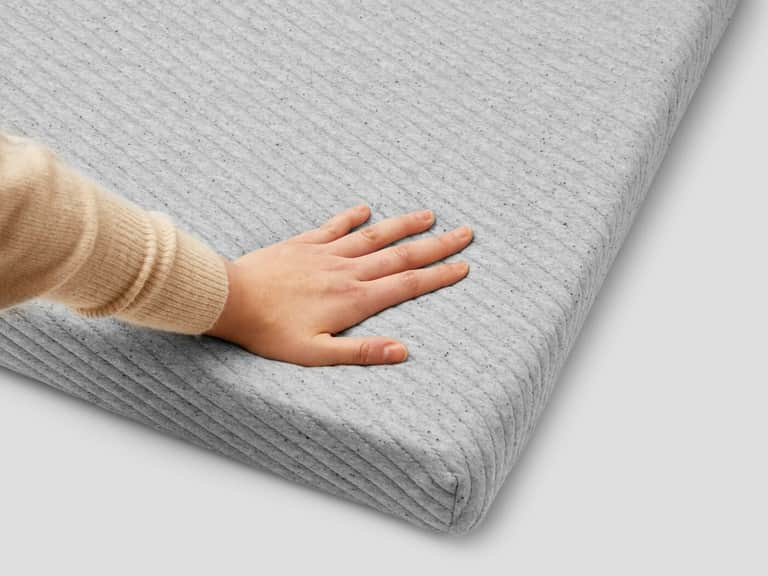
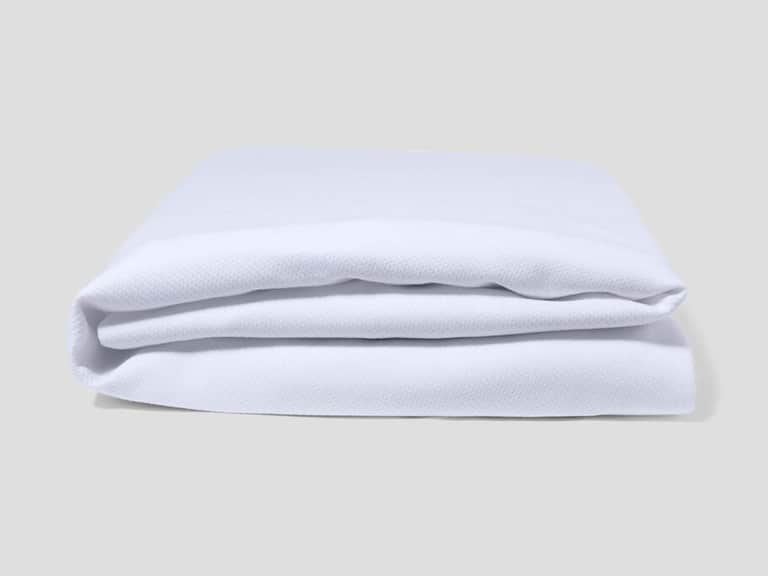
The Suite Sleep Washable Wool Mattress Pad, for example, is described as having an organic cotton cover and super-washed wool fill, with a fitted style and deep pockets. Its care guidance calls for machine washing in cold water with a natural detergent, followed by low-heat tumble drying or hanging to dry. Those directions are specific to that pad and should not be treated as universal instructions for every wool mattress pad. You can review the Suite Sleep Washable Wool Mattress Pad details when checking its care requirements.
It is also worth checking the pad for damage before washing. Look for loose seams, torn fabric, stretched elastic, or quilting that has begun to open. A wash can worsen a weak seam or allow fill to shift. If damage is minor, follow the maker’s advice on repair before laundering; if it is substantial, avoid putting the pad through a cycle that could make the problem larger.
How often does a wool pad need washing?
There is no single calendar that suits every home. How often a pad needs attention depends on whether it is covered by a fitted sheet, whether spills or perspiration reach it, how many people use the bed, and what the manufacturer recommends. For many households, washing a mattress pad periodically—or when it becomes visibly soiled or develops an odor—is more reasonable than washing it every week.
The fitted sheet above the pad does much of the routine work of catching skin oils, lint, and everyday debris. Washing sheets regularly and addressing spills promptly can reduce the need to launder the pad. A washable protector beneath or over a pad may also help manage particular risks, provided the layers fit properly and do not compromise the pad’s intended care. More barriers are not always better: a crowded bed can bunch, trap heat, or make routine cleaning harder.
People with allergies, asthma, skin sensitivities, or other health concerns may have different priorities. General bedding advice cannot replace guidance from a clinician about a particular condition. Nor should a product’s natural material be treated as a promise to prevent allergies or illness. A clean and dry sleep environment is sensible; claims of guaranteed health outcomes are not.
Preparing the pad for washing
When the label permits machine washing, remove the fitted sheet and lift the pad carefully. Wool-filled bedding can be bulky, and forcing it into a small washer may put unnecessary strain on the seams or prevent it from moving freely. If the pad cannot fit comfortably, a larger-capacity machine or a professional cleaner familiar with the item may be a better option. Do not compress it simply to make the lid close.
Before washing, shake the pad gently to release loose lint and dust. For a small fresh spill, blot with a clean towel rather than rubbing the material. Rubbing can drive liquid farther into the fill or distort the surface. If a spot treatment is appropriate under the care instructions, test it in an inconspicuous area first and use only a small amount. Avoid soaking a wool-filled pad unless the maker says that soaking is acceptable.
Wash the pad separately when practical. This leaves room for water and detergent to circulate and avoids snagging on zippers, hooks, or heavy garments. Fasten any closures, smooth the pad rather than twisting it into a tight bundle, and check that the washer’s drum can accommodate it. If the care label calls for a gentle or delicate cycle, select that setting; do not substitute an intense cycle because the pad appears sturdy.
Choosing water and detergent
For a washable wool mattress pad, temperature is one of the most important variables. Follow the stated temperature precisely. If the instructions specify cold water, use cold water rather than warm or hot. Sudden changes in temperature and excessive heat can be hard on wool fibers, while strong mechanical action can contribute to felting, shrinkage, or a lumpy feel. The cotton cover and fitted edges may also be affected by conditions beyond the maker’s recommendations.
Use a mild detergent suited to the care instructions. A small amount is often preferable to a heavy dose, since excess detergent may be difficult to rinse from a thick, absorbent item. “Natural” on a bottle is not by itself proof that a detergent is suitable for wool; formulations vary. Check the label and the pad’s directions, and avoid adding an unapproved stain remover or laundry booster.
Bleach is a poor choice unless the manufacturer explicitly permits a particular product. It can damage fibers, alter color, or weaken materials. Fabric softener is best avoided when the instructions say so—and wool pads often do not need it. Softener may leave a coating on fibers and can interfere with the material’s natural feel or moisture behavior. The simplest wash is usually the safest: suitable detergent, the approved cycle, and no unnecessary additives.
A gentle washing routine
Once the preparation is complete, set the washer according to the label. A practical sequence for a pad whose instructions permit machine washing is:
- Confirm the care label allows machine washing and note the permitted temperature and cycle.
- Place the pad in a suitably sized machine without crowding it.
- Add a modest amount of an approved mild detergent; skip bleach and fabric softener unless the maker expressly directs otherwise.
- Choose the cycle and spin setting specified by the manufacturer.
- Remove the pad promptly when the cycle ends, supporting its weight rather than pulling hard on one corner.
If the pad is extremely heavy when wet, do not wring or twist it. Wet wool and its surrounding fabric can be strained by rough handling. Support the pad from underneath as you move it, and let the washer’s permitted spin remove as much water as the care instructions allow. If it still feels saturated, a clean, dry towel can help absorb surface moisture: lay the pad flat, press gently, and lift the towel away. Avoid aggressive squeezing.
Drying: patience is part of the method
Drying is not an afterthought. A pad put back on the bed while damp may retain moisture and develop an unpleasant odor; a pad exposed to more heat than its care label allows may shrink or lose its shape. The instructions determine the method. Some washable wool pads may be tumble dried on low heat, while others should be air-dried. Never assume that a setting safe for cotton is safe for wool.
For a pad whose label permits low-heat tumble drying, use that setting and check it periodically. Remove the pad as soon as it is dry rather than letting it continue to tumble. If the instructions recommend hanging to dry, support the pad evenly so its weight does not pull one edge out of shape. A broad drying rack or several lines can distribute that weight more gently than a narrow hanger.
When air-drying, choose a clean, well-ventilated place. Spread the pad as fully as possible and turn it occasionally if the maker’s directions allow. Good airflow helps moisture escape; a crowded, humid room does not. Direct sun may be appropriate for some items but not others, so check the care instructions rather than relying on a general rule. Keep the pad away from radiators, hot-air vents, and other strong heat sources.
Before putting the pad back on the mattress, check more than the surface. The quilting and fill can remain damp after the cover feels dry. Allow enough time for the entire pad to dry through. If it smells musty or feels cool and moist in the center, it needs more drying. A little patience here is less troublesome than trapping moisture beneath clean sheets.
Freshening between washes
Everyday care is often more useful than frequent washing. When changing the sheets, give the mattress and pad time to air. Fold the bedding back for a short period, open a window if conditions allow, and let ordinary room ventilation do its work. Airing is not a substitute for washing after a spill or for following care instructions, but it can help prevent the bed from feeling close and stale.
Keep the room reasonably dry and address dampness promptly. If a drink spills, blot the area and follow the manufacturer’s spot-cleaning advice. If the pad gets wet from a leak or other substantial exposure, remove it from the mattress and dry it thoroughly as soon as possible. The mattress beneath should also be checked; cleaning the pad alone will not resolve moisture that has reached the bed itself.
Vacuuming is not automatically appropriate for every pad. If the manufacturer permits it, use a clean upholstery attachment and gentle suction, without pressing hard or pulling at the fabric. If the label is silent, ask the maker before treating vacuuming as a routine. Avoid sprays marketed as odor removers or disinfectants unless they are confirmed safe for the pad and permitted by its care instructions. Fragrance can cover an odor without addressing its source, and a wet spray may leave the fill damp.
Common mistakes to avoid
Most wool-pad mishaps come not from neglect but from applying the habits of other laundry to a different material. A few small cautions help preserve the pad’s shape and usefulness:
- Do not ignore the label. Care instructions are specific to the product’s construction and should guide every cleaning decision.
- Do not use high heat by default. Hot water, a hot dryer, or direct heat may damage wool or affect the pad’s fit.
- Do not use bleach or fabric softener casually. These products can be unsuitable for the fibers and may conflict with the maker’s directions.
- Do not wring the pad. Twisting can strain seams and distort the fill.
- Do not store it while damp. Dry the pad thoroughly before returning it to the bed or putting it away.
- Do not assume every “wool” pad is washable. Similar materials can be assembled in ways that require different care.
Storage and seasonal care
If the pad will be stored for a season, clean it only as directed and make certain it is completely dry. Store it in a breathable fabric bag or clean cotton cover rather than sealing it in a plastic bag while any moisture remains. Choose a cool, dry place away from direct sunlight and household dampness. Avoid compressing the pad for long periods if that could flatten or distort its fill.
A seasonal check is a useful moment to inspect the elastic, stitching, and surface. Look for thinning, small tears, persistent odors, or areas where the fill seems uneven. A little unevenness may settle after gentle handling, but a damaged seam can allow the fill to shift more substantially. When a repair or cleaning method is uncertain, the manufacturer is the most reliable source of product-specific advice.
A cleaner bed, without overcomplicating it
A wool mattress pad does not demand an elaborate ritual. It asks for a modest degree of attention: protect it with clean bedding, air it when convenient, respond quickly to spills, wash it only in the way its maker permits, and let it dry completely. These habits support a tidy sleep environment while respecting the particular materials of the pad.
There is a temptation to treat cleanliness as a matter of stronger products and more frequent cycles. With wool, restraint is often the more thoughtful approach. A suitable detergent, a gentle wash, and careful drying can do more for the pad than a cabinet full of special sprays. The bed is not a laboratory, but it is a place where small routines accumulate. A breathable layer kept clean and dry can make the ordinary business of going to sleep feel a little more settled.