Bedding & Mattress Care
Zippered Encasements vs. Fitted Protectors: Understanding Bedding Barriers
A mattress barrier is an unassuming piece of household engineering: it sits out of sight, beneath the sheet, and is asked to make a complicated promise. But “protection” can mean several things. The right choice depends on what you are trying to keep away, how much of the mattress you want covered, and whether you are prepared to remove and wash the barrier when life inevitably gets on the bed.
Published November 7, 2026
In the quiet hierarchy of bedroom objects, the mattress protector is seldom the star. Sheets are touched and admired; pillows are adjusted with the seriousness of a diplomatic negotiation. A protector, by contrast, is usually installed once and then forgotten. This is precisely why its design deserves a little attention. A barrier that does not fit, that is difficult to launder, or that fails to address the household’s actual concerns may provide less reassurance than its name suggests.
Two common formats offer different kinds of coverage. A zippered encasement surrounds the mattress on every side, closing around it with a zipper. A fitted protector lies over the top and wraps around the mattress edges, much like a fitted sheet. One is a complete enclosure; the other is a removable surface layer. Neither is automatically the better choice. They answer different questions.
For an everyday spill, a washable fitted protector may be the simplest response. For a household seeking an enclosed barrier against dust mites or bed bugs, an encasement’s full coverage may be more appropriate—provided its construction and zipper are designed for that purpose. The distinction is not merely one of shape. It runs through materials, moisture resistance, laundering, fit, comfort, and the expectations attached to the word “protection.”
Two designs, two different jobs
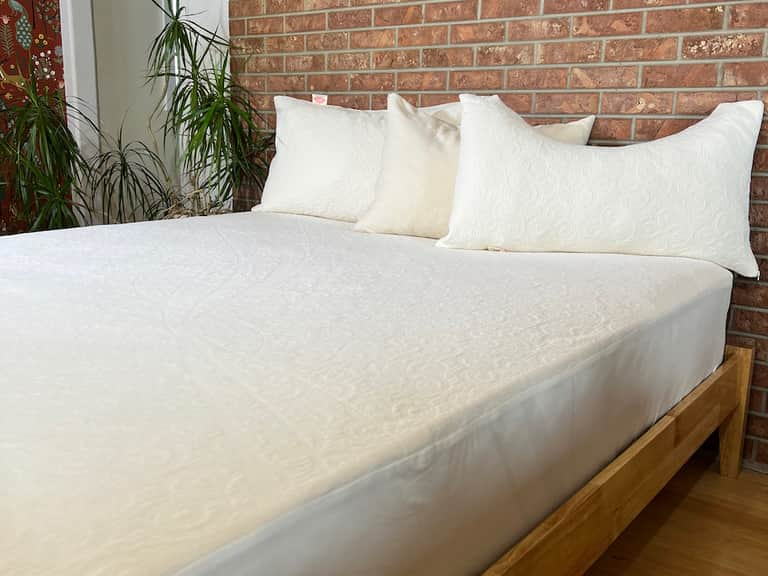
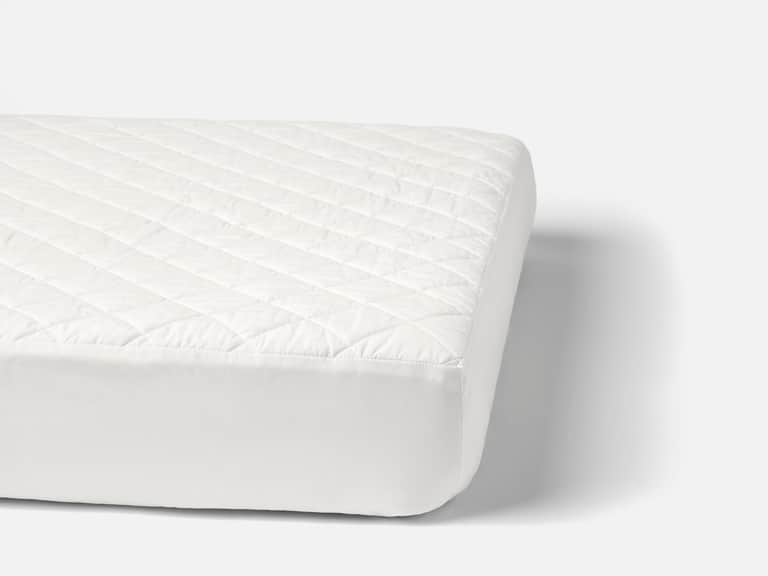
A fitted protector is generally the easier object to picture: a fabric panel covers the sleep surface, with elasticized sides that stretch beneath the mattress. Some are designed primarily to guard against ordinary dirt, perspiration, and wear; others include a waterproof layer intended to stop liquid from reaching the mattress. The top fabric may be cotton, a knit blend, or another material, and the barrier beneath it can alter both performance and feel.
An encasement covers the mattress top, bottom, and sides. Its zipper closes the opening, enclosing the mattress rather than simply laying a shield across the surface. The format can be useful when protection from exposure around the mattress—not just from what lands on top—is the central concern. But a zipper alone does not establish that a particular product blocks a specific allergen or pest. The fabric, seams, zipper construction, and stated performance all matter. A general-purpose cover should not be assumed to have the same function as a purpose-built dust mite or bed bug barrier.
In practical terms, the difference is like that between a rain jacket and a sealed case. Both can be useful; neither is a universal answer. A fitted protector is often less involved to put on and take off. An encasement offers broader coverage but may require more effort to install, especially on a deep, heavy mattress or in a tight bedroom. The more complete design can also make routine removal feel like a small piece of furniture-moving, which is worth considering before purchase.
What are you trying to keep out?
“Allergen protection” is a phrase that can sound comprehensive while concealing important differences. Dust mites are microscopic organisms associated with household dust; their allergens can be present in bedding and other soft furnishings. A barrier intended to limit exposure needs to be constructed for that purpose, and the degree of coverage matters. A fitted protector may cover the upper sleeping surface, while an encasement surrounds the mattress. Neither format, by itself, removes allergens already present elsewhere in a room.
Likewise, a waterproof protector and a dust mite barrier are not necessarily interchangeable. A waterproof layer is intended to prevent liquid from passing through. A barrier marketed for allergens or pests may rely on closely woven fabric and carefully finished openings. Some products may combine features, but the label and care information should be read rather than inferred from the product’s silhouette. For health concerns such as asthma or persistent allergy symptoms, a bedding change can be one part of a broader plan; it should not be presented as a treatment or substitute for professional medical advice.
For ordinary household protection, the priorities may be more modest. A glass of water on the bedside table, a child’s occasional nighttime accident, a pet invited onto the bed, or the gradual accumulation of skin oils and perspiration can all make a washable surface layer useful. If the concern is moisture, look specifically for a product described as waterproof. If the goal is to protect against daily grime while maintaining a familiar mattress feel, a breathable, non-waterproof fitted layer may be sufficient.
It helps to name the concern plainly before shopping: spills, routine wear, allergens, pests, or some combination. The answer can then be matched to the claim. “More coverage” is not always synonymous with “more suitable,” especially if the added coverage makes cleaning so cumbersome that it is rarely done.
Materials, comfort, and the hidden layer
The surface fabric is the part a sleeper may notice first, although it is usually covered by a sheet. Natural fibers such as cotton are often chosen for their familiar hand and breathability. A stretch-knit fabric can follow the mattress contours with little stiffness. Quilted pads add loft and softness, but they are not necessarily waterproof. These are distinct product types, even when all are casually called “protectors.”
When a waterproof barrier is needed, the layer beneath the fabric deserves scrutiny. It may be designed to block liquid while remaining flexible and relatively quiet. Some waterproof products use polyurethane-based membranes; other constructions differ. The material name alone does not tell the whole story about comfort, durability, or care. Look for explicit information about what the layer is intended to block, whether the product is described as breathable, and how it should be washed and dried.
For those who prefer organic cotton bedding, certification language can help clarify what a claim applies to. A certification may cover particular fibers or stages of production; it does not automatically mean that every component of a layered product is organic, waterproof, or suited to allergy control. Read the specific product description and certification details rather than treating a broad environmental or material term as a performance guarantee.
One example of a fitted, breathable option is the Suite Sleep Organic Cotton Knit Mattress Protector. It is described as a fitted stretch-knit cover made from GOTS-certified organic cotton, with 18-inch pockets and a machine-washable design. Its description emphasizes protection from dust, dirt, and everyday wear, not waterproofing. That distinction is useful: a breathable cotton layer can be a practical bedding barrier without being the right choice for a household whose primary concern is liquid spills.
Any extra layer can change the sensation of a mattress, if only slightly. A thick quilted pad may soften the surface; a taut encasement may make the bed feel firmer or less flexible; a poorly fitted protector may wrinkle or shift beneath the sheet. People who are sensitive to texture or temperature may notice differences that others do not. A clean sleep environment need not come at the expense of a comfortable one, but the two aims sometimes require a compromise.
Fit is not a minor detail
A protector can have admirable materials and still be wrong for a mattress if its dimensions do not match. Check the mattress length and width, then measure its depth, including any pillow-top or added topper that will remain beneath the protector. A fitted model’s pocket depth needs to accommodate the mattress without stretching the corners into a constant state of complaint. An encasement must likewise be made for the mattress profile; a cover that is too small can be difficult to close, while excess fabric can bunch.
There is a particular satisfaction in a fitted protector that settles neatly around the corners and stays put. Its elastic should be secure without being so strained that it slips free. For an encasement, consider whether the mattress can be lifted or tilted safely for installation. A heavier mattress may make the process awkward for one person. If the cover must be removed regularly for washing, imagine doing that task in the actual room, not in the abstract spaciousness of a product description.
Deep-pocket measurements are not interchangeable across brands, and listed maximum depths should be treated as practical limits rather than invitations to force a tight fit. A protector that shifts can expose parts of the mattress; one that is stretched too far may put stress on seams and elastic. A good fit is a form of protection in its own right.
Care: the part that determines whether protection lasts
Laundering instructions are part of a protector’s design, not fine print to be discovered after a stain. Some fitted protectors can be machine-washed; others may require gentler handling. Waterproof membranes can be damaged by high heat, bleach, or products not recommended by the manufacturer. Cotton items may shrink, particularly when dried at high temperatures. Before buying, consider whether the recommended cycle and drying method fit the household’s routine.
Fitted protectors are usually easier to remove than full encasements, though “usually” leaves room for a very deep mattress, a crowded room, or a particularly stubborn elastic edge. A washable fitted layer can be useful when frequent laundering is likely. Encasements are often intended to remain in place for longer intervals, depending on the product’s instructions and the reason for using one. If an encasement is being used as part of a pest-control plan, follow the manufacturer’s specific guidance; opening or removing it prematurely may undermine the purpose.
Whatever the format, use the care label as the authority. Avoid assuming that a product can be treated like ordinary sheets. A “waterproof” barrier may require low-temperature drying, and a fabric with organic cotton may need washing before first use or may be deliberately sized to account for shrinkage. Gentle detergent, no bleach, and moderate drying temperatures are common recommendations, but they are not universal rules. The product’s own instructions take precedence.
Routine cleaning need not become a ritual of anxiety. Change and wash sheets on a schedule suited to the household, clean spills promptly, and launder the protector as directed. Vacuuming around the bed and keeping the bedroom reasonably dry and ventilated may also support general cleanliness. No single textile can take over the work of maintaining an entire room, and a spotless mattress is not a measure of personal virtue.
A clearer way to choose
Instead of beginning with product names, begin with the task. A few questions can narrow the field:
- Is liquid protection essential? Choose a protector explicitly described as waterproof if spills or accidents are the principal concern.
- Do you need coverage around the whole mattress? Consider an encasement when full enclosure is important, and verify that its stated barrier performance matches the concern.
- Is breathability or a natural-fiber surface a priority? Compare the top fabric and complete material construction, not just the marketing language.
- How often will it need washing? A fitted protector may be simpler for frequent removal; check whether an encasement’s maintenance schedule is manageable.
- Will it fit the mattress you actually own? Measure depth and account for any topper, then compare those measurements with the product’s pocket or encasement dimensions.
There is no need to buy the most elaborate barrier available if a simpler one answers the real question. Nor is a lightweight fitted cover an adequate substitute for a properly specified encasement when full enclosure is the objective. Good bedding decisions are less about accumulating layers than about assigning each layer a clear job.
A note about infants and shared sleep spaces
In a crib, fit and safety take priority over softness or decorative detail. A mattress pad should be designed for the specific crib mattress, lie securely beneath the fitted sheet, and be used according to the crib and bedding manufacturers’ instructions. Loose bedding and improvised layers do not belong in an infant sleep space. Caregivers should follow current safe-sleep guidance from qualified public-health sources, rather than treating a product’s material claims as a substitute for those recommendations.
For older children, guest rooms, and shared accommodations, the same practical principles apply: select a barrier that fits, can be cleaned appropriately, and addresses the likely use. A washable cover is especially helpful where bedding turns over often, but a product’s intended performance should remain clear. A pad that absorbs moisture, a waterproof protector, and an allergen-oriented encasement may all be useful; they are not the same thing.
The quiet value of a good barrier
The best mattress protector is rarely the one with the most dramatic vocabulary. It is the one whose construction suits the household, whose fit stays secure, whose care instructions are realistic, and whose limitations are understood. A fitted protector offers an accessible layer between the sleeper and the mattress, with convenience that makes regular washing less of an undertaking. A zippered encasement provides broader coverage and may be appropriate when the whole mattress needs to be enclosed, but its performance depends on the details of its design and the care taken in using it.
Both formats can help preserve a mattress and make ordinary housekeeping more manageable. Neither makes a bed invulnerable, and neither should be expected to solve every hygiene or health concern in a room. The useful question is not simply which protector is “best.” It is what needs protecting, from what, and by a barrier that the household will actually maintain. Beneath the sheet, that is the difference between a purchase made on reassurance and one made with understanding.